
Performance Marketing vs Brand Marketing: What Growing Companies Need First
You are investing in marketing every month, but growth still feels unstable.
Leads appear suddenly and disappear just as fast. Sales teams complain about lead quality. Marketing teams talk about impressions and reach, but revenue does not move in a straight line.
At this stage, most business owners face the same critical dilemma:
Performance Marketing vs Brand Marketing — what should a growing company focus on first?
The wrong decision here does not just slow growth. It quietly drains budgets, confidence, and momentum.
This blog will help you make the right call — based on business reality, not theory.
Performance Marketing vs Brand Marketing: Understanding the Core Difference
Before choosing a direction, clarity is essential.
What Is Performance Marketing?
The real business pain: “I need measurable results, not assumptions.”
Performance marketing focuses on direct, trackable outcomes. Every campaign is designed to deliver a specific action, such as:
- Leads
- Sales
- Demo bookings
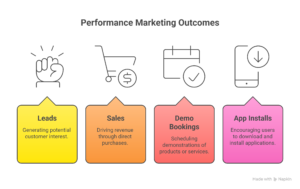
- App installs
You can see exactly how much you spend and what you receive in return.
Performance marketing companies typically work with:
- Paid search advertising
- Paid social advertising
- Conversion-optimized landing pages
- Funnel and tracking systems
This is why performance marketing vs brand marketing becomes a serious discussion when revenue pressure increases.
What Is Brand Marketing?
The deeper fear: “People do not trust us yet.”
Brand marketing focuses on long-term perception and credibility. It builds:
- Awareness
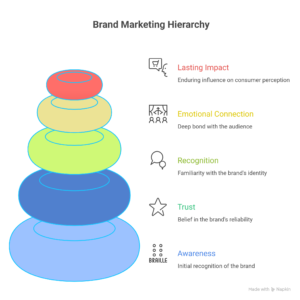
- Trust
- Recognition
- Emotional connection
Brand marketing includes:
- Messaging consistency
- Visual identity
- Authority positioning
A strong brand marketing company helps businesses stay remembered, not just noticed.
Why This Decision Feels So Difficult for Growing Businesses
Here is where most companies struggle.
Performance marketing delivers faster results, but:
- Conversions suffer without trust
- Leads negotiate harder
- Costs increase over time
Brand marketing builds trust, but:
- Results take time
- Revenue impact is delayed
- Cash flow pressure increases early
This tension is why Performance Marketing vs Brand Marketing feels confusing — especially for growing companies that cannot afford mistakes.
Why Performance Marketing Comes First
Emotionally:
You cannot scale vision without predictable revenue.
Operationally:
Performance marketing provides immediate feedback. You quickly learn:
- Whether there is real demand
- Which audience converts
- What messaging works
- Where money is wasted
Strategically:
Performance marketing validates your business before you invest heavily in brand building.
This is why most online digital marketing services begin with performance-led campaigns.
The Risk of Relying Only on Performance Marketing
Performance marketing works — but only to a point.
When brand signals are missing:
- Ads feel transactional
- Leads lack confidence
- Price sensitivity increases
- Acquisition costs rise over time
Pure performance marketing without trust becomes expensive.
This is where intelligent digital marketing solutions go beyond clicks and impressions.
How Brand Marketing Strengthens Performance
Brand marketing does not replace performance marketing. It amplifies it. When brand elements are layered correctly:
- Conversion rates improve
- Sales cycles shorten
- Retargeting becomes more effective
- Customer confidence increases
Early brand signals inside performance campaigns include:
- Educational messaging
- Authority-based content
- Testimonials and proof points
- Consistent tone and positioning
This balance is what separates average execution from high-impact digital marketing agency service strategies.
The Smart Growth Framework for Scaling Companies
Stage 1: Performance-Led Foundation
Focus on:
- Paid traffic
- Conversion tracking
- Funnel optimization
- Lead quality analysis
Goal: Predictable revenue
Stage 2: Brand Signals Inside Performance
Layer in:
- Educational content
- Trust-focused messaging
- Clear positioning
- Value-driven retargeting
Goal: Higher conversion efficiency
Stage 3: Brand-Led Expansion
Once revenue stabilizes:
- Organic visibility
- Content leadership
- Long-term brand equity
Goal: Sustainable growth
Performance Marketing vs Brand Marketing: Comparison Table
| Criteria | Performance Marketing | Brand Marketing | Best Choice for Growth |
| Primary Focus | Leads and Sales | Trust and Awareness | Performance first |
| Speed of Results | Fast | Slow | Performance |
| Measurability | High | Medium | Performance |
| Cost Impact | Short-term ROI | Long-term efficiency | Combined |
| Risk Level | Lower | Higher early | Performance |
Micro Case Example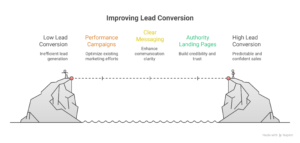
Business Type: B2B service provider
Challenge: Leads coming in, but low conversion rate
Approach Taken:
- Continued performance campaigns
- Improved messaging clarity
- Added authority-focused landing pages
Outcome within 90 days:
- Better lead quality
- Improved sales confidence
- More predictable pipeline
This is how performance marketing vs brand marketing works best — together, not separately.
Where Digital Marketing Services for Small Business Often Fail
Common mistakes include:
- Starting with branding before revenue validation
- Running ads without positioning
- Chasing visibility instead of conversion clarity
A reliable digital marketing solution aligns strategy with business stage, not trends.
How Marencor Approaches Performance Marketing vs Brand Marketing
At Marencor, we do not force businesses to choose between performance and brand.
Our approach is simple:
- Lead with performance to protect cash flow
- Build trust directly inside campaigns
- Scale brand efforts only after ROI is proven
This works especially well for companies seeking digital marketing services for small business that need growth without unnecessary risk. No inflated metrics. No empty branding. Just structured, measurable growth.
FAQs
- Is performance marketing better than brand marketing?
Performance marketing delivers faster results, while brand marketing compounds over time. - Can small businesses invest in brand marketing early?
Yes, but only when it supports performance outcomes. - How long does brand marketing take to show impact?
Typically several months of consistent execution. - Do performance marketing companies handle branding?
Strategic ones integrate brand trust into campaigns. - Which businesses benefit most from performance-first marketing?
B2B services, SaaS, healthcare, and growth-focused companies.
Final Thought
Growth isn’t about choosing sides between performance and brand. It’s about choosing the right sequence. Start with performance to generate momentum and validate demand. Layer brand early to build trust and reduce friction. When both grow together, results become predictable, scalable, and sustainable.